
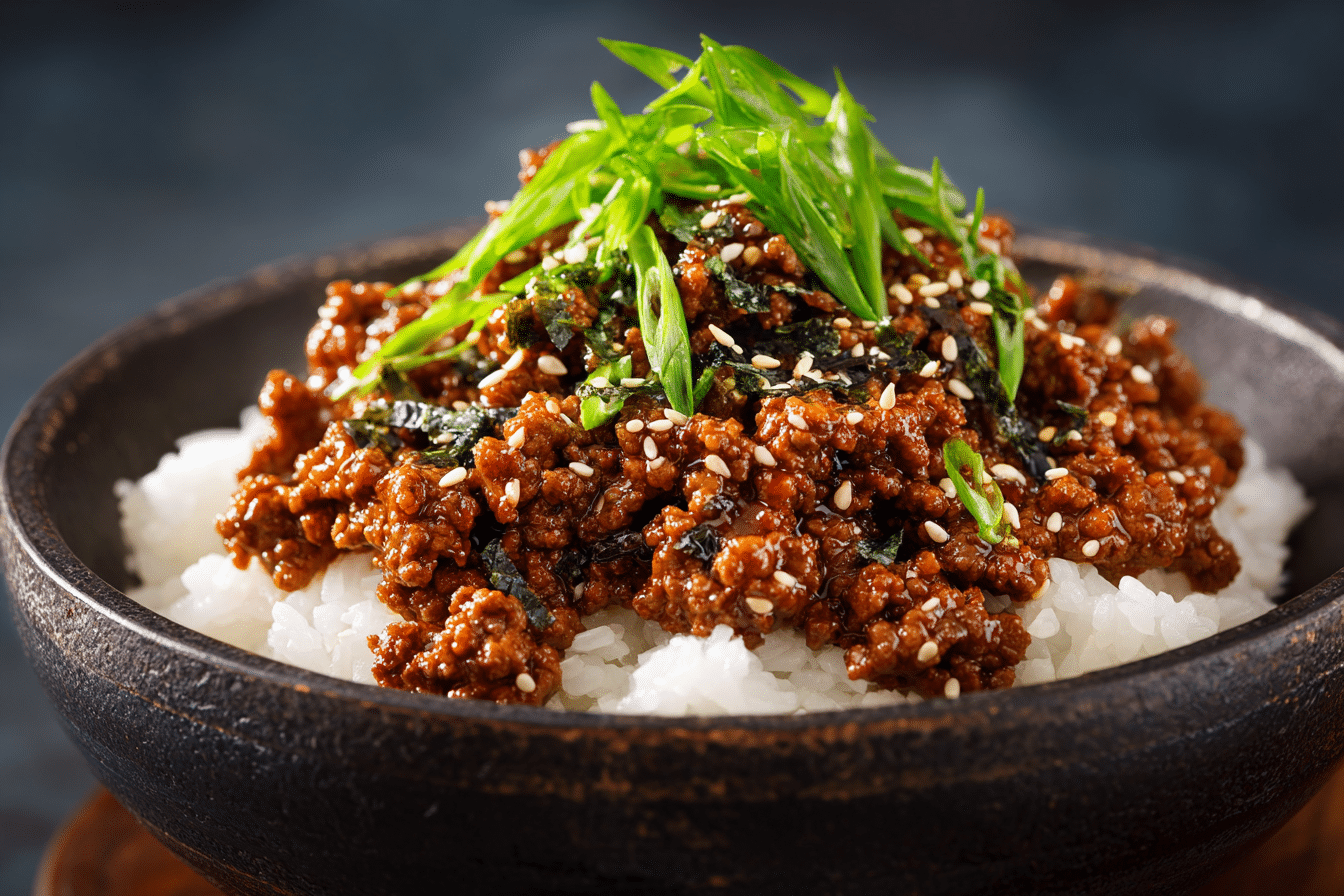
The Korean Ground Beef Bowl is a comforting, flavorful dish that delivers big taste with minimal effort. Inspired by the flavors of traditional Korean bulgogi, this weeknight-friendly version swaps thinly sliced ribeye for quick-cooking ground beef — without sacrificing that signature balance of sweet, savory, and spicy.
This dish has become a staple in many American kitchens for its affordability, simplicity, and bold umami flavors. It’s often served over steaming jasmine or short-grain white rice, garnished with green onions, sesame seeds, and sometimes a drizzle of gochujang or a fried egg.
Each bite is tender, aromatic, and deeply satisfying — perfect for busy nights when you want something hearty and delicious on the table fast.
Ingredients Overview
Let’s break down the key ingredients that bring this Korean Ground Beef Bowl to life:
-
Ground Beef (80/20 or 85/15): Juicy, flavorful ground beef forms the base. The slightly higher fat content ensures tender, flavorful bites. You can substitute with lean beef, ground turkey, or even plant-based crumbles if preferred.
-
Soy Sauce: A foundational element that adds umami and saltiness. Use low-sodium soy sauce if watching salt intake.
-
Brown Sugar: Balances out the savory and spicy elements with sweetness. Dark brown sugar gives deeper caramel notes, while light brown works fine for a subtler taste.
-
Garlic: Freshly minced garlic is a must — it infuses the beef with classic Korean-style aroma.
-
Ginger: Adds warmth and brightness. Use freshly grated for best results, though ground ginger can work in a pinch.
-
Sesame Oil: Just a teaspoon is enough to impart a rich, nutty depth. It’s best added at the end to retain flavor.
-
Crushed Red Pepper Flakes or Gochugaru: Adds a mild heat. For more authentic spice, Korean red pepper flakes (gochugaru) offer a deeper flavor.
-
Green Onions: Fresh and slightly sharp, they cut through the richness and add a pop of color and crunch.
-
White Rice: Short- or medium-grain rice is ideal. Cook until fluffy — it soaks up the savory-sweet sauce beautifully.
Optional Add-ins and Swaps:
-
Add shredded carrots or zucchini for texture and color.
-
Swap rice for cauliflower rice for a low-carb option.
-
Use tamari for a gluten-free version.
Step-by-Step Instructions
-
Prep your aromatics: Start by mincing 3–4 cloves of garlic and grating about 1 teaspoon of fresh ginger. Chop 2–3 green onions, separating whites and greens.
-
Cook the beef: Heat a large skillet over medium-high heat. Add 1 pound of ground beef and cook until browned, breaking it up with a wooden spoon. This takes about 5–6 minutes. Don’t drain all the fat — leave just a bit for flavor.
-
Add aromatics: Once the beef is mostly cooked, stir in the garlic, ginger, and the white parts of the green onions. Cook for 1–2 minutes until fragrant.
-
Make the sauce: In a small bowl, whisk together:
-
1/4 cup soy sauce
-
2–3 tablespoons brown sugar
-
1/2 teaspoon crushed red pepper flakes (or more to taste)
-
1 teaspoon sesame oil
-
-
Simmer: Pour the sauce into the beef mixture and stir well. Simmer for another 2–3 minutes until the sauce thickens slightly and coats the meat.
-
Taste and adjust: Try a spoonful — adjust seasoning if needed. You can add a splash more soy sauce or a pinch of sugar based on your taste.
-
Serve: Spoon the beef mixture over bowls of steamed white rice. Garnish with green onion tops and a sprinkle of sesame seeds.
Optional Enhancements:
-
Top with a fried egg for a bibimbap-style vibe.
-
Add a drizzle of gochujang for an extra kick of heat and depth.
-
Serve with kimchi or quick-pickled cucumbers for a refreshing contrast.
Tips, Variations & Substitutions
Pro Tips for Success:
-
Use a wide skillet so the beef browns instead of steams.
-
Let the garlic and ginger cook just enough to release aroma, not burn.
-
Don’t skip the sesame oil at the end — it adds authentic Korean flavor.
Variations:
-
Korean Ground Turkey Bowl: Lighten things up with ground turkey and less sugar.
-
Korean BBQ Lettuce Wraps: Serve in butter lettuce leaves with rice or vermicelli noodles for a fun, low-carb dinner.
-
Vegetarian Version: Use crumbled tofu or plant-based ground “beef” alternatives. Add mushrooms for extra umami.
Allergy-Friendly Swaps:
-
Gluten-Free: Use tamari instead of soy sauce.
-
Low-Sugar: Use monk fruit sweetener or coconut aminos with less added sugar.
-
Nut-Free: Most versions are naturally nut-free, just confirm your sesame oil isn’t processed in a shared facility if allergies are severe.
 Serving Ideas & Occasions
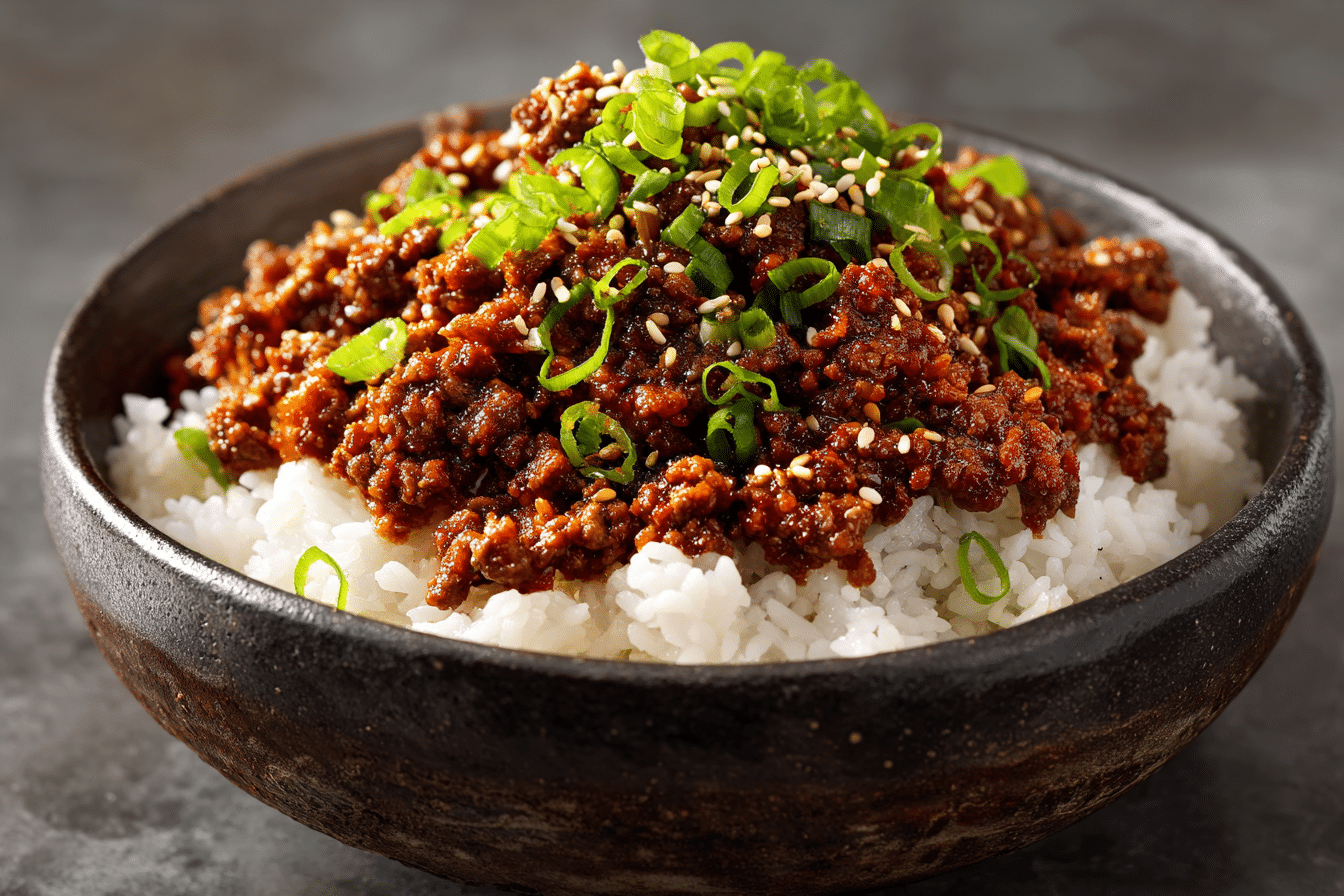
This Korean Ground Beef Bowl is endlessly versatile and fits many occasions:
-
Quick Weeknight Dinners: Ready in under 30 minutes with pantry staples.
-
Meal Prep: Make a double batch and store in containers for easy weekday lunches.
-
Family-Friendly: Serve with mild spice for kids, and offer extra gochujang or hot sauce on the side for adults.
-
Korean-Inspired Dinner Nights: Pair with banchan like kimchi, steamed egg (gyeran jjim), or seaweed salad.
For drinks, consider iced barley tea, sparkling water with lime, or even a crisp lager.
Nutritional & Health Notes
This dish is rich in protein, with approximately 20–25g per serving depending on portion size and meat used. The rice adds a steady source of carbohydrates, while the garlic, ginger, and green onions provide antioxidants and digestive support.
You can reduce calories by:
-
Using leaner meat or ground turkey
-
Swapping rice for cauliflower rice
-
Cutting back slightly on sugar
Sesame oil, while high in fat, is used sparingly and offers heart-healthy fats. Overall, this bowl is balanced, satisfying, and easy to modify for different dietary needs.
FAQs
Q1: Can I make Korean Ground Beef Bowls ahead of time?
Yes, they reheat very well. Store the beef and rice separately in airtight containers for up to 4 days. Reheat in a skillet or microwave with a splash of water to keep it moist.
Q2: What’s the difference between gochugaru and red pepper flakes?
Gochugaru is a Korean chili powder made from sun-dried peppers. It’s less sharp and more flavorful than American-style red pepper flakes. If you have access to gochugaru, it’s a great addition.
Q3: Is this recipe kid-friendly?
Absolutely. You can reduce or omit the spice to suit younger palates. Kids usually love the sweet-savory combo of beef and rice.
Q4: Can I freeze Korean Ground Beef?
Yes! Cool the cooked beef completely, then freeze in a zip-top bag or airtight container. Thaw overnight in the fridge and reheat gently on the stove.
Q5: What kind of rice works best?
Steamed short-grain white rice or jasmine rice are great options. For extra texture, try mixing in a little cooked brown rice or using sticky rice.
Q6: How do I make this low-carb or keto-friendly?
Use cauliflower rice instead of white rice, and reduce the brown sugar or use a keto-friendly sweetener like erythritol or monk fruit.
Q7: Can I add vegetables to this dish?
Definitely! Add shredded carrots, chopped bell peppers, baby spinach, or mushrooms to the skillet when cooking the beef, or stir-fry them separately.
Korean Ground Beef Bowl – A Quick, Flavor-Packed Weeknight Favorite
This Korean Ground Beef Bowl is a quick, flavorful weeknight meal made with savory-sweet ground beef, garlic, ginger, and soy sauce, served over rice with fresh toppings.
- Prep Time: 10 minutes
- Cook Time: 15 minutes
- Total Time: 25 minutes
- Yield: 4 servings 1x
Ingredients
-
1 lb ground beef (80/20 or 85/15)
-
1/4 cup soy sauce (or low-sodium)
-
2–3 tbsp brown sugar
-
3 cloves garlic, minced
-
1 tsp fresh ginger, grated
-
1 tsp sesame oil
-
1/2 tsp crushed red pepper flakes or gochugaru
-
2–3 green onions, chopped (whites and greens separated)
-
2 cups cooked white rice
-
Sesame seeds for garnish (optional)
Instructions
-
Heat skillet over medium-high heat. Cook ground beef until browned, about 5–6 minutes.
-
Add garlic, ginger, and white parts of green onions. Cook for 1–2 minutes until fragrant.
-
In a bowl, mix soy sauce, brown sugar, red pepper flakes, and sesame oil.
-
Pour sauce into beef and simmer 2–3 minutes until thickened.
-
Serve beef over rice. Top with green onions and sesame seeds.
Notes
-
Add a fried egg for richness.
-
Swap rice for cauliflower rice for low-carb version.
-
Leftovers keep well refrigerated up to 4 days.