
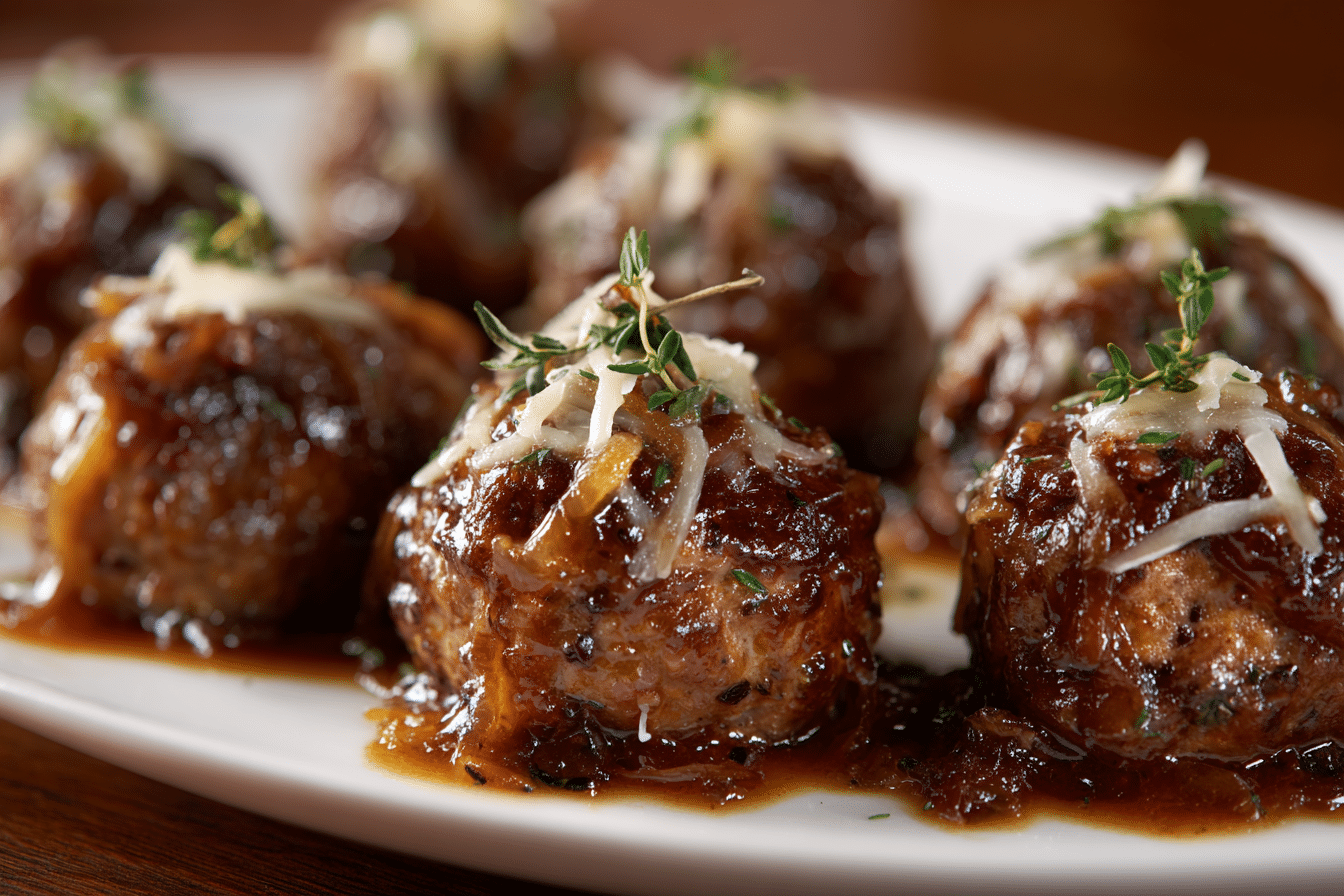
If you’re craving a dish that’s both comforting and full of flavor, French Onion Meatballs with Savory Onion Sauce deliver on every level. This recipe takes the classic, slow-cooked richness of French onion soup and pairs it with tender, juicy meatballs for a hearty and satisfying main course.
The star of this dish is the deeply caramelized onions, cooked down to sweet, golden perfection. They form the base of a rich, savory sauce that clings to every bite of the meatballs. Those meatballs? Soft, flavorful, and soaked with all the deliciousness of the sauce. Whether served over creamy mashed potatoes, soft noodles, or a thick slice of toasted bread, this dish is perfect for weeknight dinners or a cozy weekend meal.
This isn’t complicated food—it’s simple, familiar ingredients brought together in a way that feels both homey and a little special.
Ingredient Breakdown
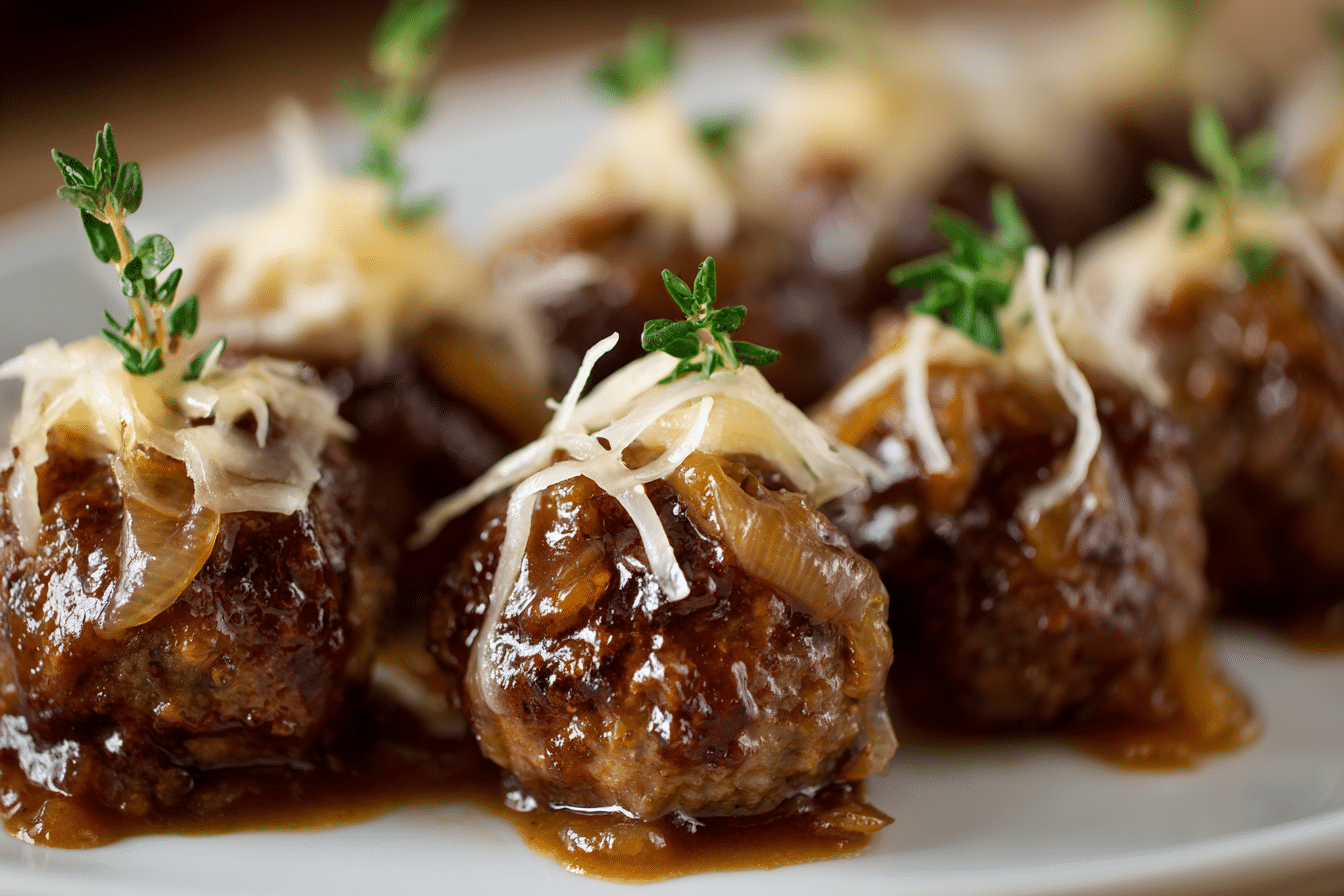
Ground Beef:
The base of the meatballs, ground beef brings a robust, meaty flavor. For best results, use beef with some fat content (around 80/20), which keeps the meatballs tender and juicy.
Breadcrumbs:
Breadcrumbs add structure and softness to the meatballs. Italian-style, plain, or even finely crushed crackers will do the job. You can substitute with oat flour or almond flour for dietary variations.
Egg:
An egg binds the meat mixture together, helping the meatballs stay intact while cooking.
Yellow Onions:
You’ll need a generous amount of onions here—they’re slow-cooked until they reach a deep, caramel hue. This process gives the sauce its sweet, savory flavor and also enhances the meatballs when added to the mixture.
Beef Broth:
Forms the body of the sauce. Use a rich, well-seasoned broth for the best depth of flavor. A vegetable or chicken broth can work in a pinch but will alter the richness.
Worcestershire Sauce:
Just a splash boosts umami and adds a hint of tang. It complements the sweetness of the onions and the meatiness of the broth.
Garlic:
Fresh garlic brings sharpness and warmth, balancing the overall richness.
Gruyère (Optional):
A layer of melted Gruyère on top transforms this into a dish reminiscent of French onion soup. Don’t have it? Try Swiss, provolone, or mozzarella.
Butter and Olive Oil:
Used together to caramelize the onions. Butter offers depth, while olive oil prevents burning during the long cook time.
Flour:
A tablespoon of flour is enough to thicken the sauce, giving it a smooth, clingy texture.
Thyme:
Thyme adds subtle earthiness that rounds out the flavor. Use fresh if you have it; dried works fine too in smaller amounts.
Step-by-Step Directions
1. Caramelize the onions:
Start by slicing three large yellow onions. Heat 2 tablespoons of butter with 1 tablespoon of olive oil in a large skillet over medium-low heat. Add the onions and a pinch of salt, then cook slowly, stirring occasionally, for 35 to 40 minutes.
You want them deeply golden and soft—not browned or crispy. Add a splash of water or broth if they start sticking. Once caramelized, remove about a third of the onions to cool for the meatball mixture.
2. Mix the meatballs:
In a large bowl, combine 1½ pounds ground beef, ½ cup breadcrumbs, 1 egg, 2 minced garlic cloves, the cooled onions, 1 tablespoon Worcestershire sauce, 1 teaspoon fresh thyme, and salt and pepper to taste.
Mix just until everything comes together. Overworking the meat will make the texture tough. Roll into 1½-inch balls—around 18 to 20 in total.
3. Brown the meatballs:
In a skillet, heat 1 tablespoon olive oil over medium heat. Brown the meatballs in batches, turning gently until all sides are golden. They don’t need to be cooked through yet—just seared for flavor. Transfer to a plate when done.
4. Make the sauce:
Sprinkle 1 tablespoon of flour over the onions still in the pan. Stir for about a minute to cook off the raw flour taste. Gradually whisk in 2 cups of beef broth, scraping the bottom of the skillet to deglaze.
Add 1 more tablespoon Worcestershire sauce and season with salt and pepper. Bring the sauce to a light simmer.
5. Simmer the meatballs:
Return the browned meatballs to the skillet. Cover with a lid and reduce the heat to low. Let them simmer for 15–20 minutes, or until they’re fully cooked and the sauce has thickened.
6. Optional cheesy topping:
Sprinkle shredded Gruyère or another melty cheese over the meatballs. Place under the broiler for a couple of minutes until the cheese is bubbling and lightly golden.
7. Garnish and serve:
Top with fresh herbs and serve warm with your favorite sides.
Tips, Tweaks & Substitutions
Helpful Tips:
-
Caramelizing onions takes time—don’t rush. Low and slow is key.
-
Use a cookie scoop or oiled hands to shape uniform meatballs.
-
Deglaze the pan with a splash of wine or vinegar for added depth before adding broth.
Variations:
-
Lower-carb option: Swap breadcrumbs for almond flour or crushed pork rinds.
-
Alternative proteins: Use ground turkey or chicken for a leaner version.
-
Stuffed version: Tuck a small cube of cheese into the center of each meatball before cooking.
-
Add veggies: Sauté mushrooms or spinach with the onions for extra nutrition and flavor.
Substitutions:
-
Fresh thyme can be replaced with ½ teaspoon dried thyme.
-
No Worcestershire? Try soy sauce mixed with a splash of balsamic vinegar.
-
For dairy-free: Skip the cheese and use plant-based butter if needed.
Serving Suggestions
This dish shines when served with something that can soak up that luxurious onion sauce. Mashed potatoes are a top choice, but egg noodles, soft polenta, or crusty bread work just as well.
Round it out with a simple side salad or steamed vegetables. The richness of the sauce pairs nicely with sharp or tangy flavors, so vinaigrettes or pickled vegetables are great companions.
Ideal for cold evenings, special family dinners, or just when you want something satisfying and home-cooked, French Onion Meatballs are versatile and delicious in any setting.
Health & Nutrition Highlights
French Onion Meatballs are rich, satisfying, and adaptable. The beef provides a solid protein base, while onions contribute natural sweetness and antioxidants. The sauce, although indulgent in flavor, doesn’t rely on heavy cream or excess fat.
If you’re looking for a lighter version, use lean ground meat, skip the cheese, and serve with a vegetable-forward side. Gluten-free eaters can swap in almond flour or gluten-free breadcrumbs and use a gluten-free flour or cornstarch to thicken the sauce.
This recipe strikes a balance between indulgence and flexibility, making it a great meal for different dietary needs.
Frequently Asked Questions
1. Can I make this ahead of time?
Yes. Both the onions and meatballs can be prepped a day in advance. Store them separately in the fridge, then assemble and simmer just before serving.
2. Does this freeze well?
It does. Let the meatballs and sauce cool completely, then freeze in an airtight container for up to 2 months. Thaw overnight in the fridge before reheating.
3. What’s the best cheese to use?
Gruyère is ideal for its nutty, melty texture. Swiss or provolone are great substitutes. Mozzarella works for a milder, more neutral flavor.
4. How can I keep meatballs from drying out?
Use meat with enough fat and avoid overmixing. Including some of the caramelized onions in the meatball mixture also helps keep them juicy.
5. How do I make it gluten-free?
Use gluten-free breadcrumbs and swap the flour with a gluten-free thickener like cornstarch or rice flour. Always check your broth and Worcestershire labels for hidden gluten.
6. Can I make it vegetarian?
Yes. Use a plant-based ground meat alternative and vegetable broth for the sauce. The caramelized onions bring a ton of flavor on their own.
7. What sides go best with this dish?
Mashed potatoes, noodles, crusty bread, or roasted vegetables all work well. A green salad with vinaigrette adds a refreshing contrast to the rich sauce.