

Chicken Saltimbocca is a timeless Italian dish that brings together a handful of flavorful ingredients to create something truly special. The name “saltimbocca” translates loosely to “jump in the mouth,” and it’s easy to see why — this dish bursts with bold, savory notes in every bite.
Traditionally prepared with veal in Rome, this version swaps in chicken for a lighter, more accessible option without sacrificing flavor. Thin cutlets are paired with delicate slices of prosciutto and fresh sage, then pan-seared to perfection and finished with a buttery white wine sauce. It’s quick to prepare, deeply satisfying, and elegant enough to serve on any occasion.
Ingredients Breakdown
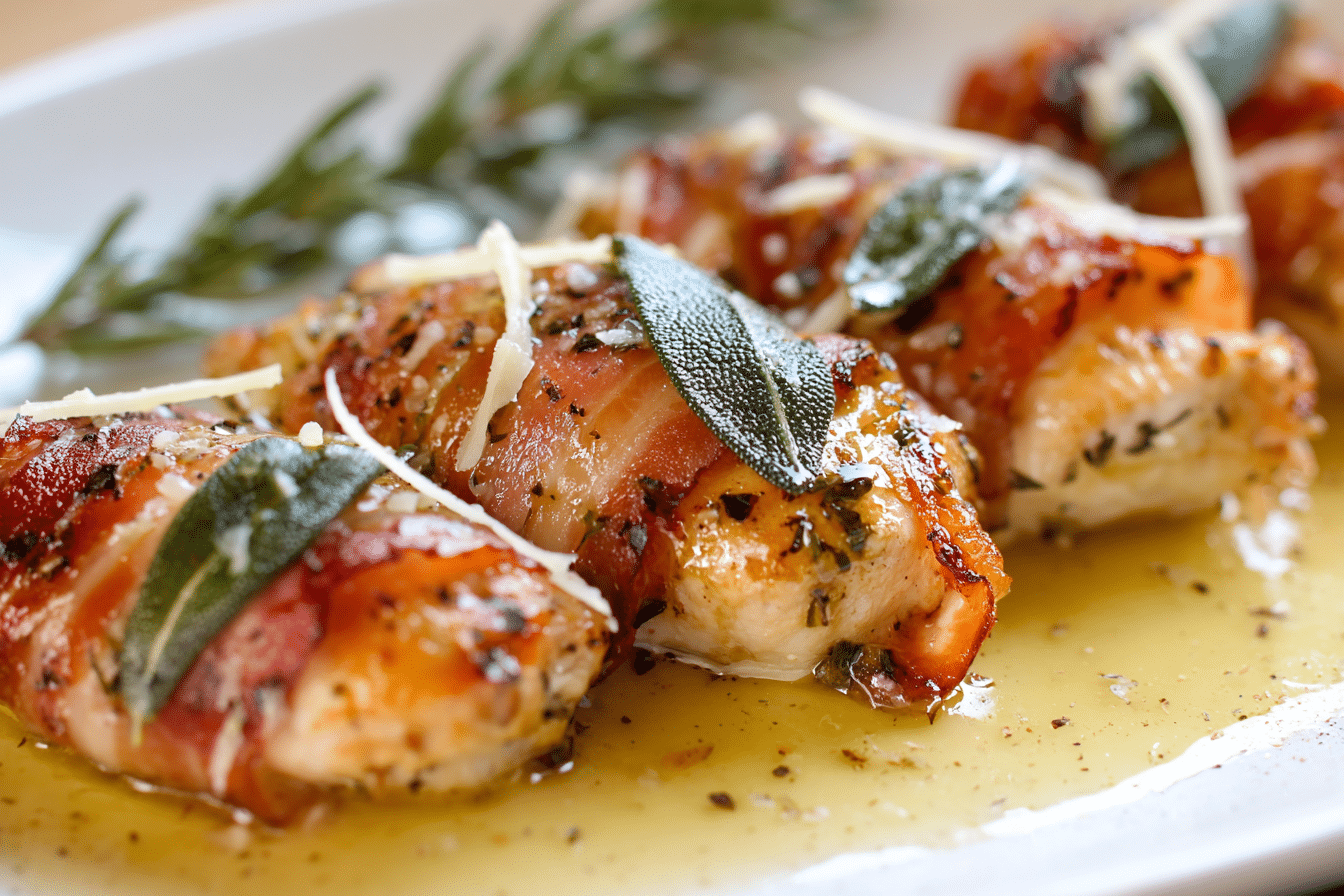
Each component plays a vital role in the overall taste and texture of Chicken Saltimbocca. Here’s how to select and use them for the best results.
Chicken Breast Cutlets
The base of the dish is thin, tender chicken. You can either purchase pre-sliced cutlets or halve boneless chicken breasts lengthwise and pound them flat to about 1/4 inch thickness. Uniform thickness ensures quick, even cooking.
Tip: Use a sheet of plastic wrap or parchment paper to cover the chicken while pounding it. A rolling pin or meat mallet works well for this step.
Prosciutto
Prosciutto brings a salty, umami-rich element to the dish that complements the chicken beautifully. Choose high-quality, thinly sliced prosciutto — the kind that’s almost see-through. It crisps up during cooking and adds a delicate texture.
Note: While speck or thin pancetta can be used, classic prosciutto gives the most authentic flavor.
Fresh Sage Leaves
Sage is what gives Saltimbocca its signature aroma and herbaceous depth. Each chicken piece gets a sage leaf tucked under the prosciutto, where it gently infuses the meat as it cooks.
Important: Always use fresh sage. Dried sage doesn’t provide the same intensity or fragrance.
Flour (for Dusting)
A light coating of flour helps the chicken brown more evenly and thickens the pan sauce just enough. Only flour the chicken side, not the prosciutto.
White Wine
A splash of dry white wine adds acidity and depth to the sauce while loosening the flavorful browned bits from the pan. It creates a simple yet elegant finish.
Best Options: Pinot Grigio, dry vermouth, or Sauvignon Blanc.
Butter and Olive Oil
These two fats work together to develop flavor and texture. Olive oil handles the high heat needed for searing, while butter rounds out the sauce with richness.
Optional Flavor Enhancers:
-
Lemon juice for brightness
-
Low-sodium chicken stock for a mellow finish
-
A few capers for a briny accent
Step-by-Step Cooking Instructions
1. Flatten the Chicken
If starting with whole chicken breasts, slice them in half horizontally. Place each piece between two sheets of plastic wrap and gently pound until they are about 1/4 inch thick.
Season the chicken lightly with black pepper.
2. Assemble the Layers
Lay one fresh sage leaf on top of each cutlet. Cover the sage with a slice of prosciutto and press down gently. The prosciutto will naturally adhere as it cooks, but you can use toothpicks for extra security if needed.
Dust only the exposed chicken side (not the prosciutto) lightly with flour, tapping off the excess.
3. Sear the Chicken
Heat 1 tablespoon of olive oil and 1 tablespoon of butter in a large skillet over medium-high heat. When the butter is melted and foamy, place the cutlets in the pan, prosciutto-side down.
Cook for about 2–3 minutes, until the prosciutto starts to crisp and the edges brown. Flip carefully and cook the chicken side for another 2–3 minutes or until fully cooked.
Remove the cutlets and keep warm, tenting loosely with foil.
4. Deglaze and Build the Sauce
Reduce the heat to medium. Pour in 1/2 cup of white wine, scraping up any bits stuck to the bottom of the pan. Let the wine reduce by about half — this usually takes 2–3 minutes.
Finish the sauce by swirling in 1 tablespoon of cold butter. For a touch of brightness, add a squeeze of lemon juice.
5. Plate and Serve
Arrange the cutlets on a serving platter or individual plates. Spoon the pan sauce over the top and serve immediately.
Recipe Variations and Helpful Tips
-
Add Cheese (Non-Traditional): For a heartier take, place a slice of mozzarella on each piece after cooking and broil briefly to melt.
-
Gluten-Free Option: Use gluten-free flour or skip the flour entirely.
-
Healthier Version: Swap the butter for a little extra olive oil and use chicken broth in place of wine for a lighter finish.
-
Extra Sage Garnish: Fry a few extra sage leaves in olive oil until crispy and use them as a garnish for texture and presentation.
A Note on Tradition
While veal saltimbocca is the original Roman version, chicken has become just as common throughout Italy and beyond. The spirit of the dish lies in its simplicity — no heavy sauces, just a few quality ingredients layered thoughtfully.
Ideal Pairings & Meal Ideas
Chicken Saltimbocca pairs beautifully with sides that complement its rich but balanced flavors. Try:
-
Creamy mashed potatoes or polenta
-
Garlic sautéed spinach or broccolini
-
Herbed risotto or orzo
-
A lemon-dressed arugula salad
Complete the meal with a crisp glass of white wine, such as Pinot Grigio or Prosecco, and a slice of crusty bread to soak up the sauce.
Nutrition and Dietary Notes
This dish is naturally lower in carbohydrates and high in protein. A single serving usually contains around 350 calories, depending on how much butter and prosciutto is used.
Health Tips:
-
Trim any visible fat from the prosciutto to lower sodium and saturated fat.
-
Use organic or pasture-raised chicken for better flavor and quality.
-
Replace butter with olive oil for a more Mediterranean-style approach.
With just a few adjustments, this dish fits well into low-carb, gluten-free, or heart-healthy diets.
Frequently Asked Questions
Q1: Can I prepare Chicken Saltimbocca in advance?
A: Yes. You can assemble the cutlets with sage and prosciutto and refrigerate them for a few hours. Cook and sauce them just before serving for the best texture and flavor.
Q2: What if I don’t have white wine?
A: You can substitute low-sodium chicken broth with a dash of lemon juice or white vinegar to mimic the acidity of wine.
Q3: Can I use dried sage instead of fresh?
A: Fresh sage is strongly recommended. Dried sage won’t give the same aroma or flavor, and it lacks the texture needed in this dish.
Q4: What type of prosciutto should I buy?
A: Look for thin, high-quality slices of prosciutto di Parma or San Daniele. Avoid thick-cut or overly fatty pieces, which won’t crisp properly.
Q5: How do I store leftovers?
A: Leftovers can be stored in the fridge for up to 3 days. Reheat gently in a skillet with a splash of broth or water to avoid drying out the meat.
Q6: Can this be frozen?
A: While technically you can freeze it, the prosciutto may lose its crisp texture. It’s best enjoyed fresh or reheated from the fridge within a few days.
Q7: What can I use instead of flour?
A: Cornstarch or rice flour are good alternatives for gluten-free versions. Or skip the flour entirely for a simpler approach.
Print
A quick and elegant Italian dish featuring chicken cutlets topped with prosciutto and sage, pan-seared to perfection and served with a buttery white wine sauce.
- Prep Time: 10 minutes
- Cook Time: 25 minutes
- Total Time: 35 minutes
- Yield: 4–6 servings 1x
Ingredients
-
4 thin chicken cutlets (or 2 chicken breasts, halved and pounded)
-
4 slices prosciutto
-
4 fresh sage leaves
-
1/4 cup all-purpose flour (for dredging)
-
Black pepper to taste
-
1 tbsp olive oil
-
2 tbsp unsalted butter, divided
-
1/2 cup dry white wine
-
Optional: lemon wedge for garnish
Instructions
-
Flatten chicken cutlets to about 1/4 inch thick and season with black pepper.
-
Place a sage leaf on each cutlet, then top with a slice of prosciutto. Press gently to stick.
-
Lightly dredge the chicken side in flour. Shake off any excess.
-
In a large skillet, heat olive oil and 1 tbsp butter over medium-high heat.
-
Cook cutlets prosciutto-side down for 2–3 minutes. Flip and cook another 2–3 minutes.
-
Remove chicken and keep warm. Pour in white wine and reduce by half.
-
Stir in remaining butter and a splash of lemon juice if desired.
-
Spoon sauce over chicken and serve immediately.